01 / MATERIAL
The source disappears.
The light remains.
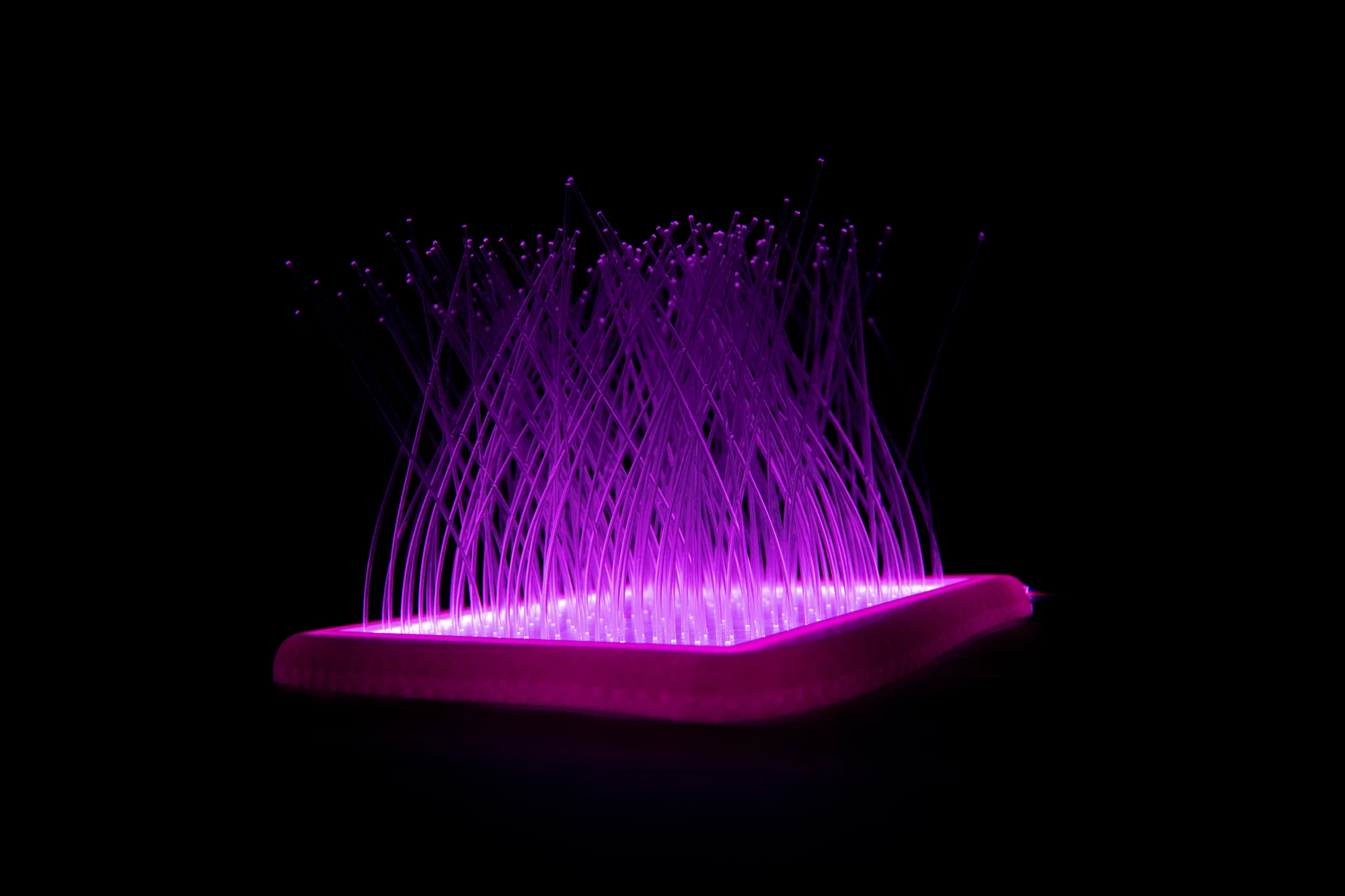
An RGB COB LED strip lights the edges of the PMMA sheets. Light travels through the acrylic and up the optical fibres to their tips.
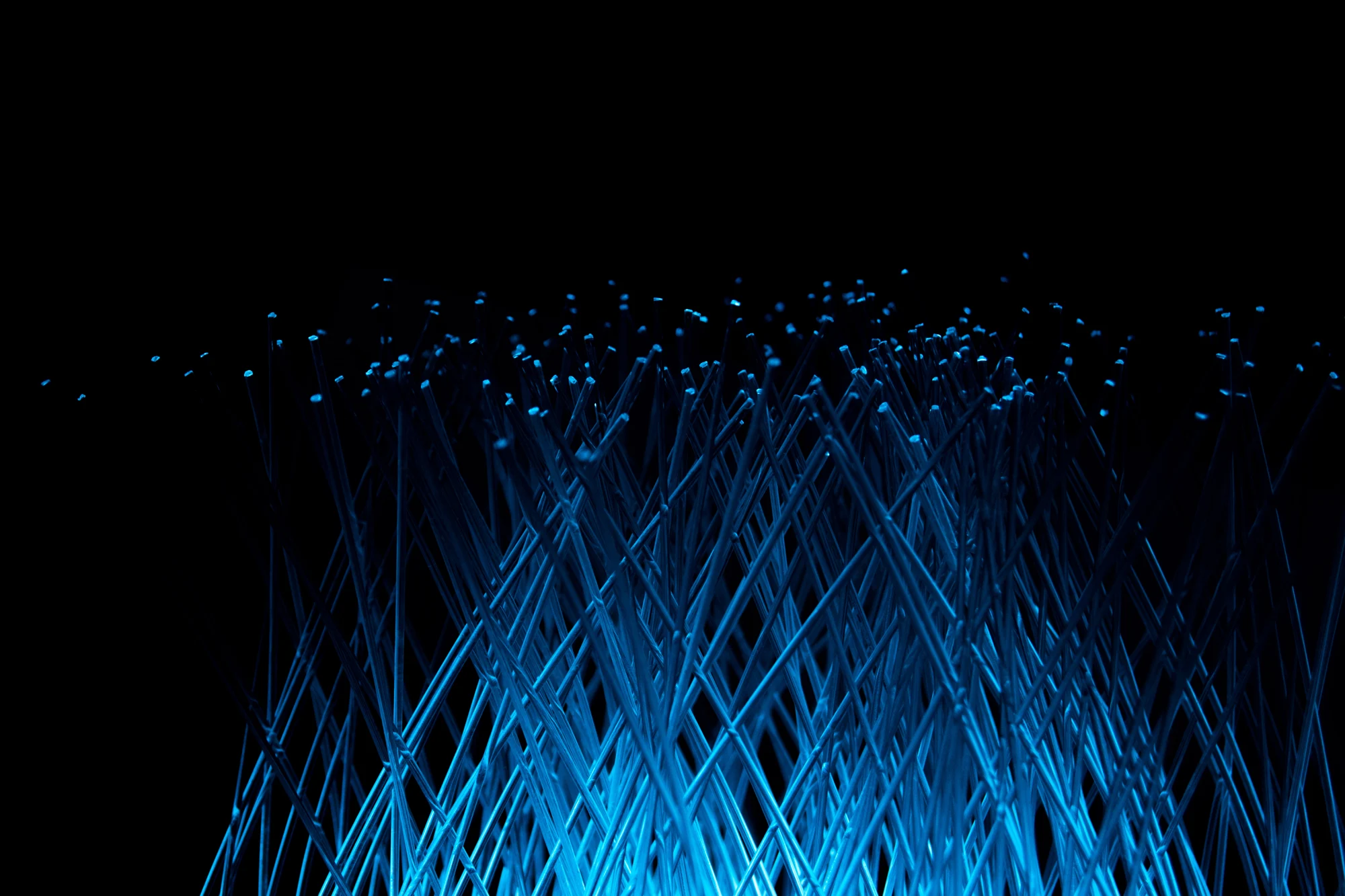
A landscape of light.
Made to be touched.
Loading the 3D model…
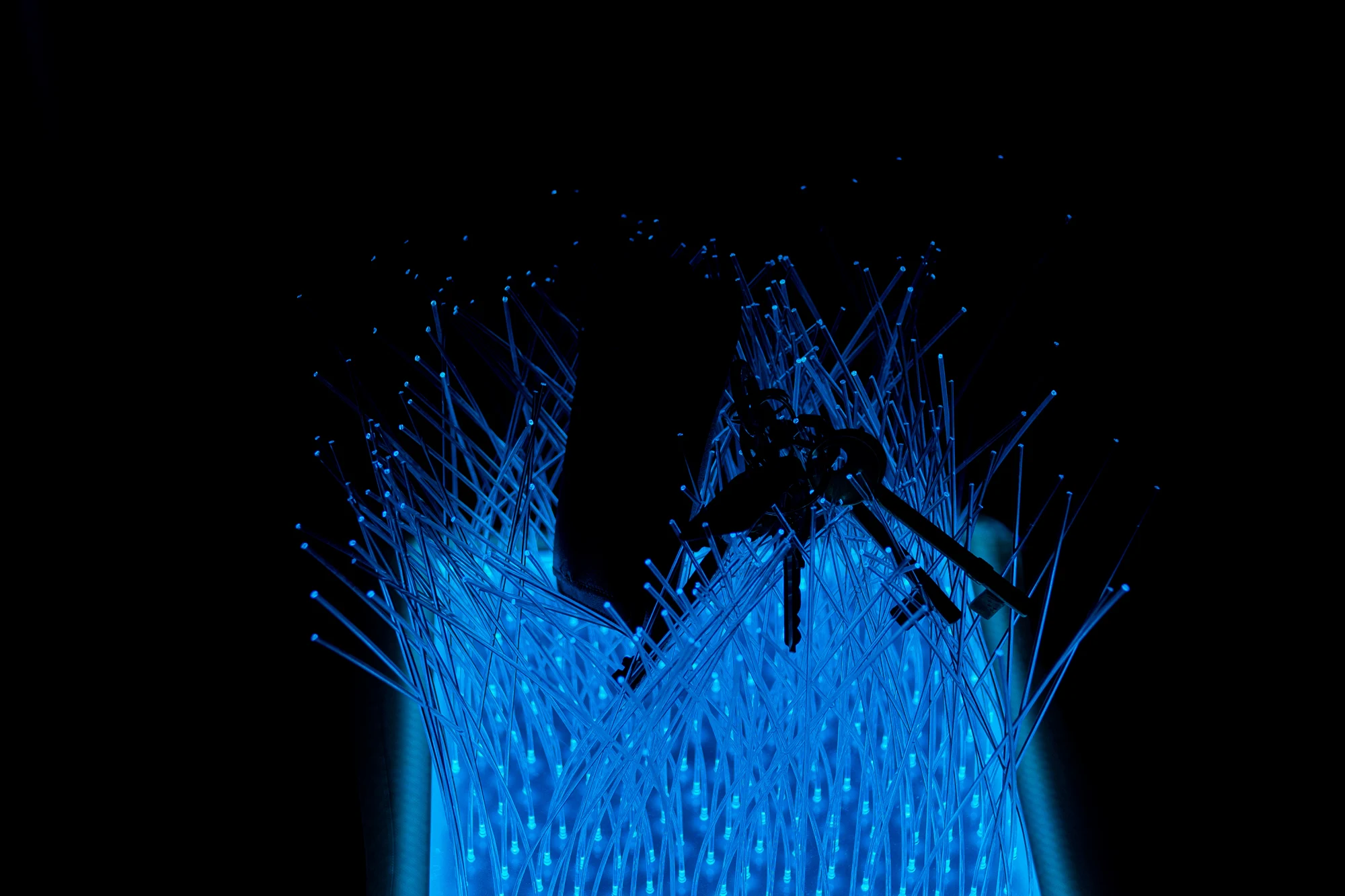
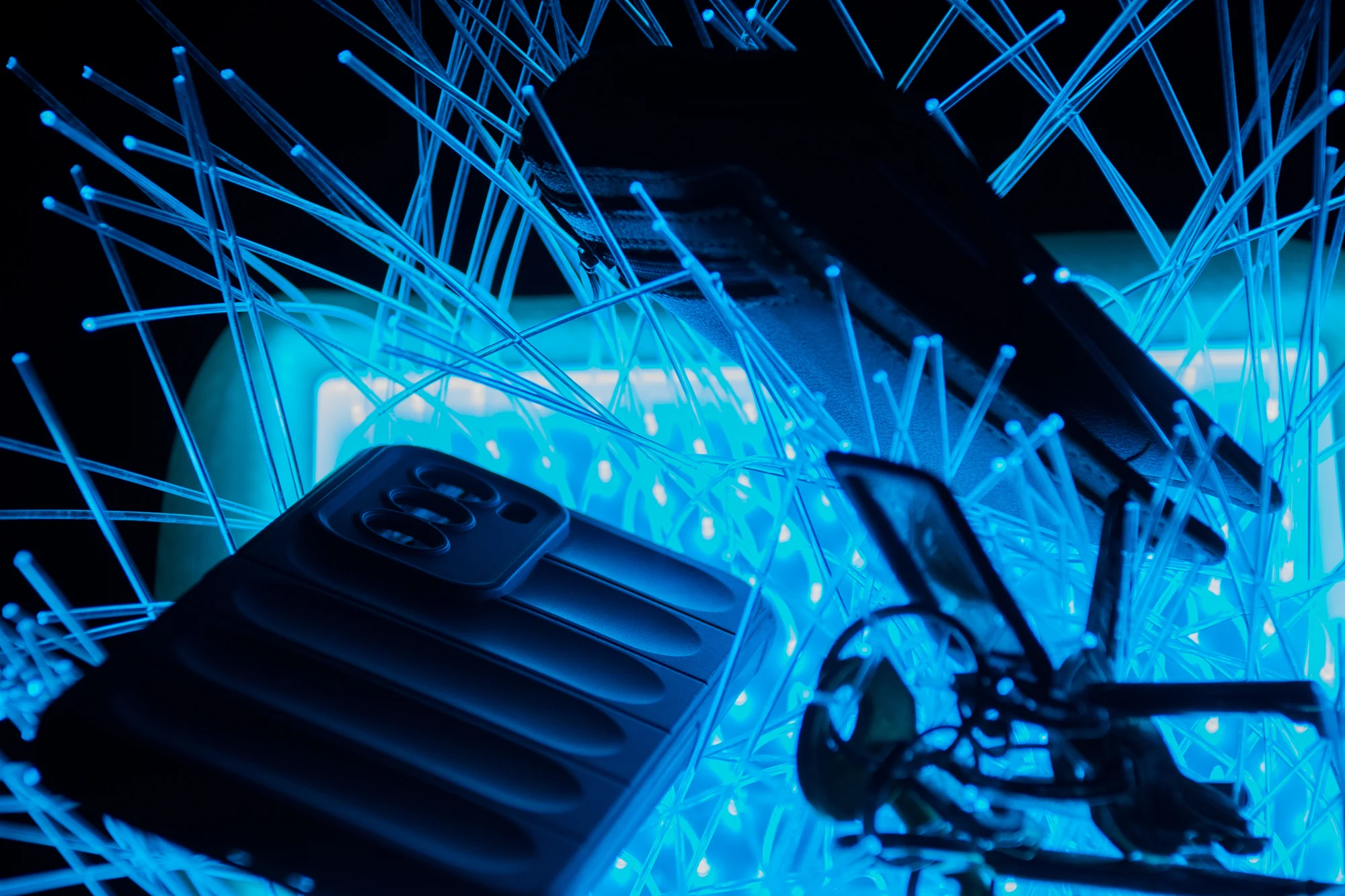
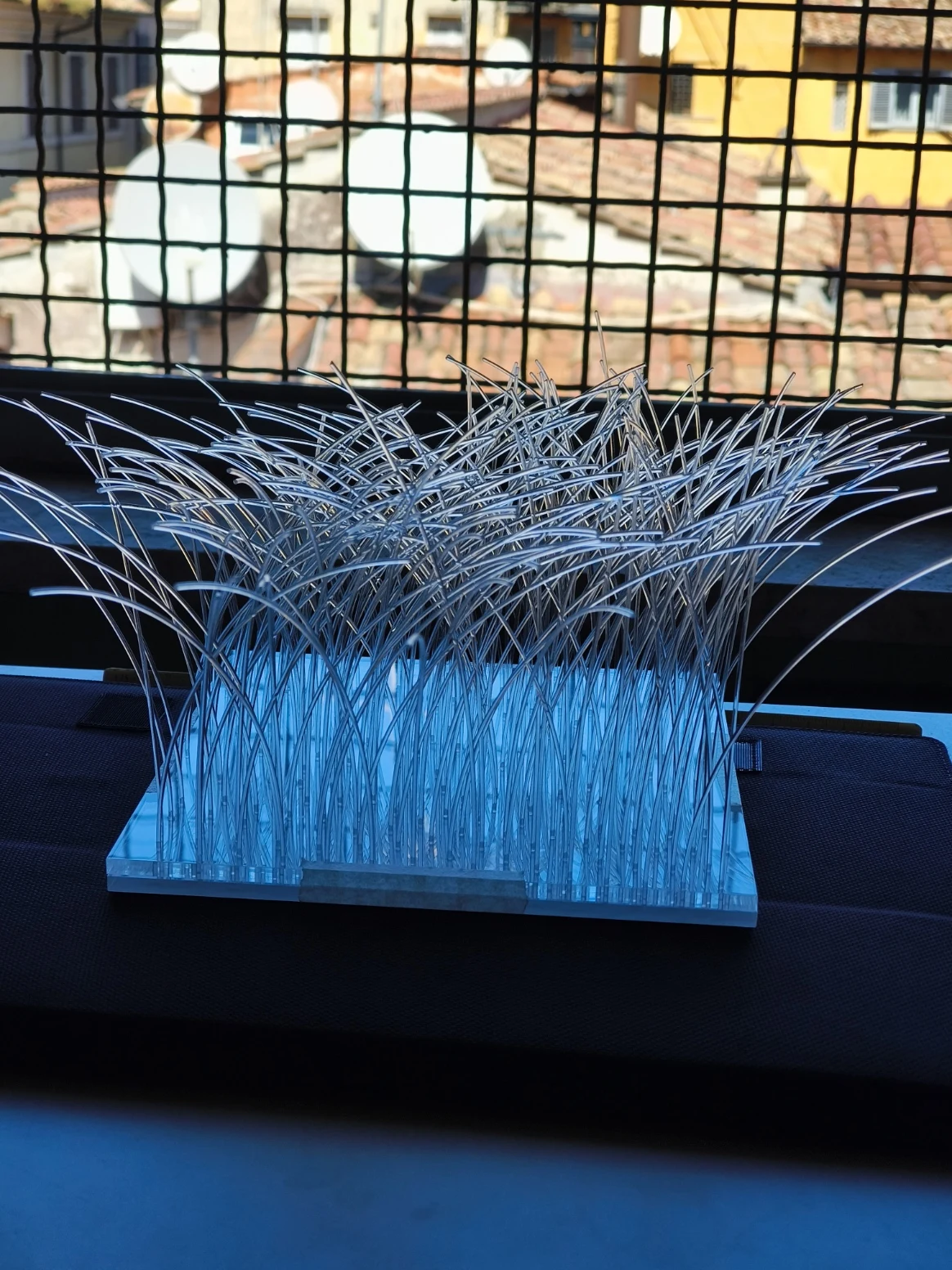
DRAG TO ROTATEPutting down your keys, brushing a surface, leaving an impression. Pinwi turns an everyday gesture into a small landscape of light. The fibres yield under weight and light spreads. Then the meadow rises again.
An RGB COB LED strip lights the edges of the PMMA sheets. Light travels through the acrylic and up the optical fibres to their tips.
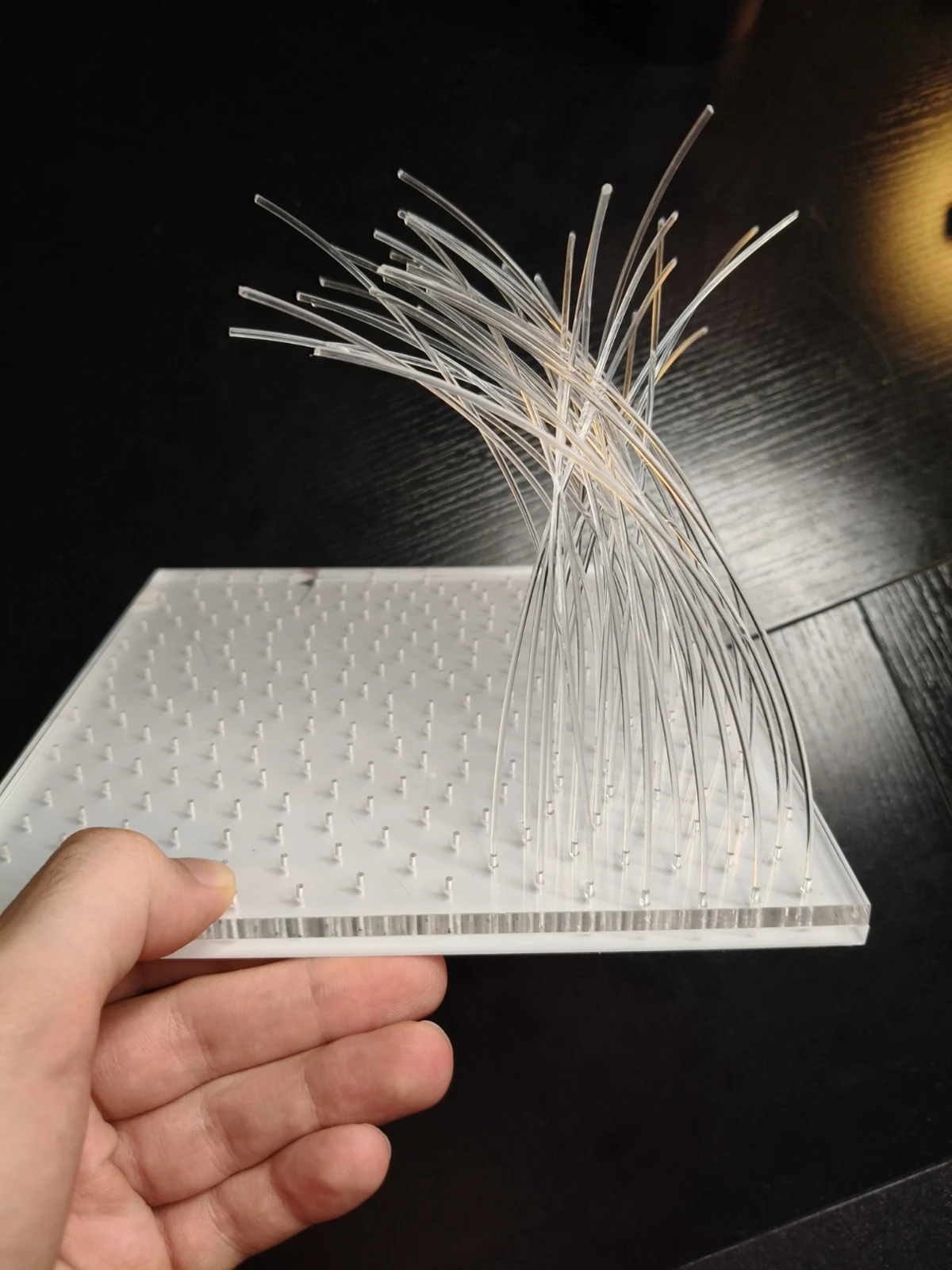
The optical fibres bend when touched. Their curvature allows light to emerge along the stems: an impression becomes visible, just for a moment.
Pinwi is a catchall, yet it invites touch before revealing its function. Objects rest on the meadow and reshape its landscape.
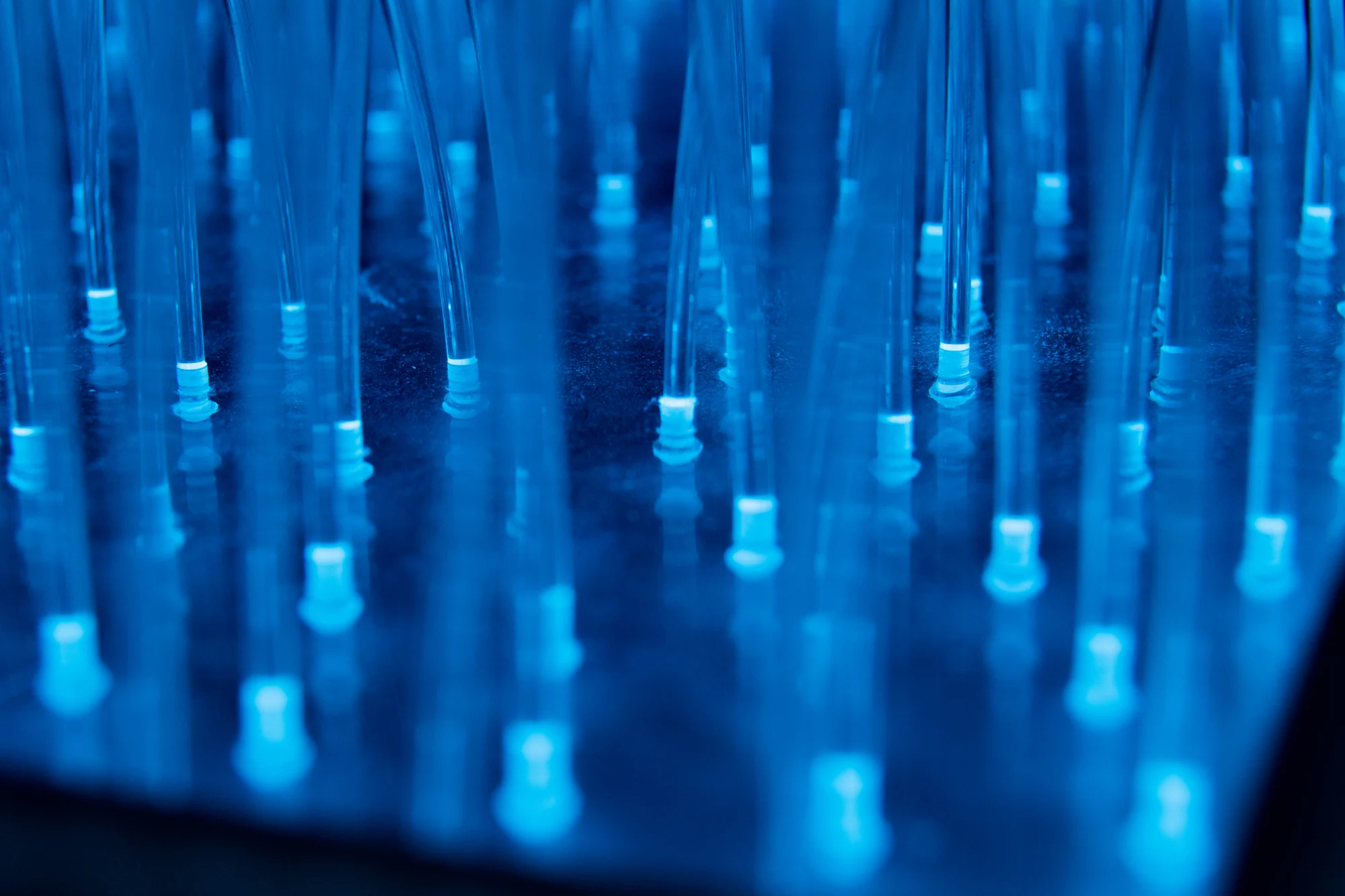
The arrangement follows phyllotaxis: each new point rotates by 137.5° and moves away from the centre according to √n. The pattern grows in a spiral, then meets the square boundary of the plate.
Distribution principle · move your cursor over the points.
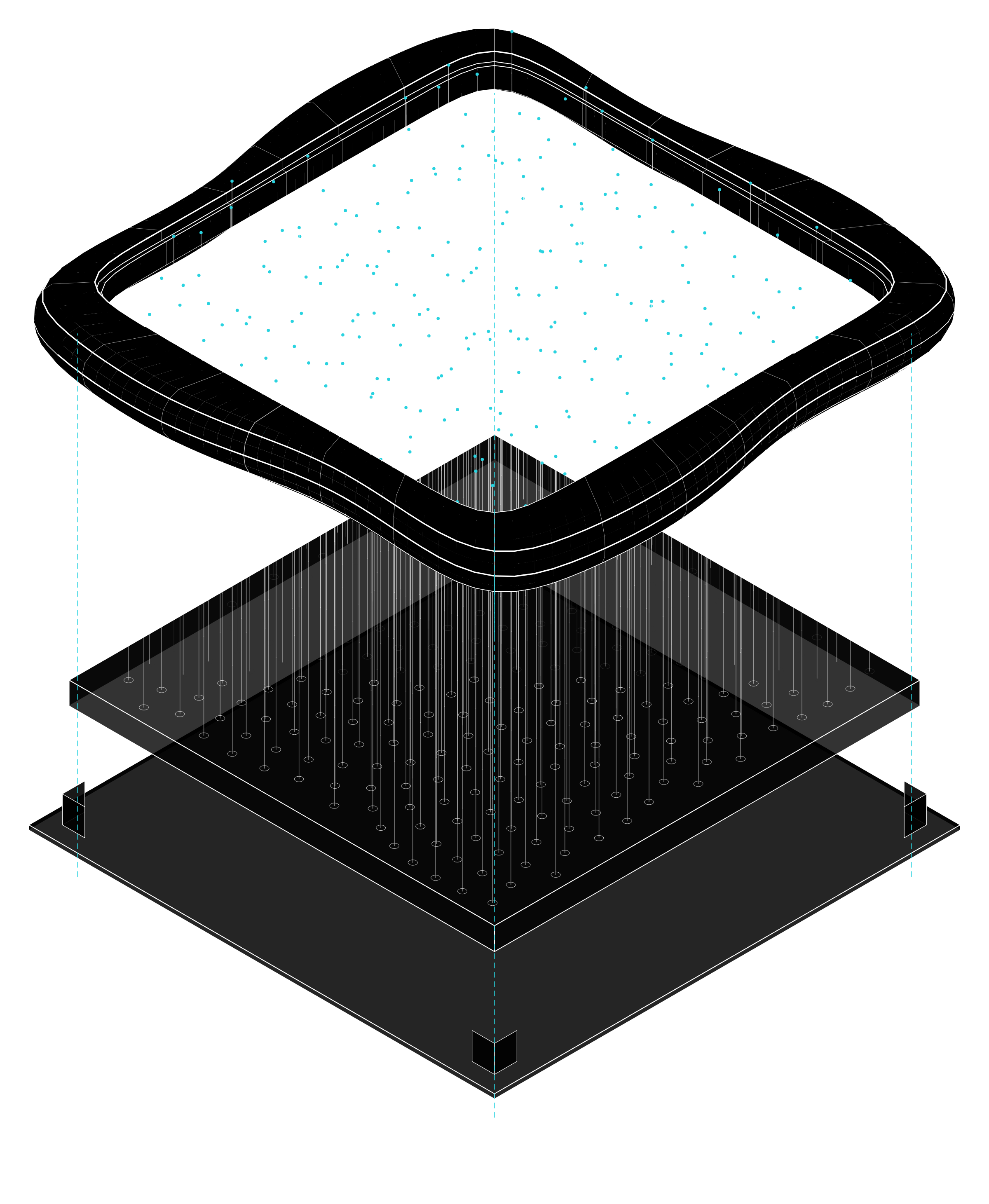 01020304
The upper frame conceals the edges and closes the assembly. Four screws fasten it from below.
250 PMMA fibres, Ø 1.5 mm. Each heat-formed lower end is held between the plates, without glue.
The upper sheet guides the fibres. Pockets in the lower sheet hold their mushroom-shaped ends.
Supports the plates. Corner brackets centre the assembly inside the frame.
The outline begins with a pinwheel: four blades become arcs, an S-shaped wave along each side. The same rotation appears in the frame and the fibre arrangement. Modules can sit together, allowing the meadow to grow.
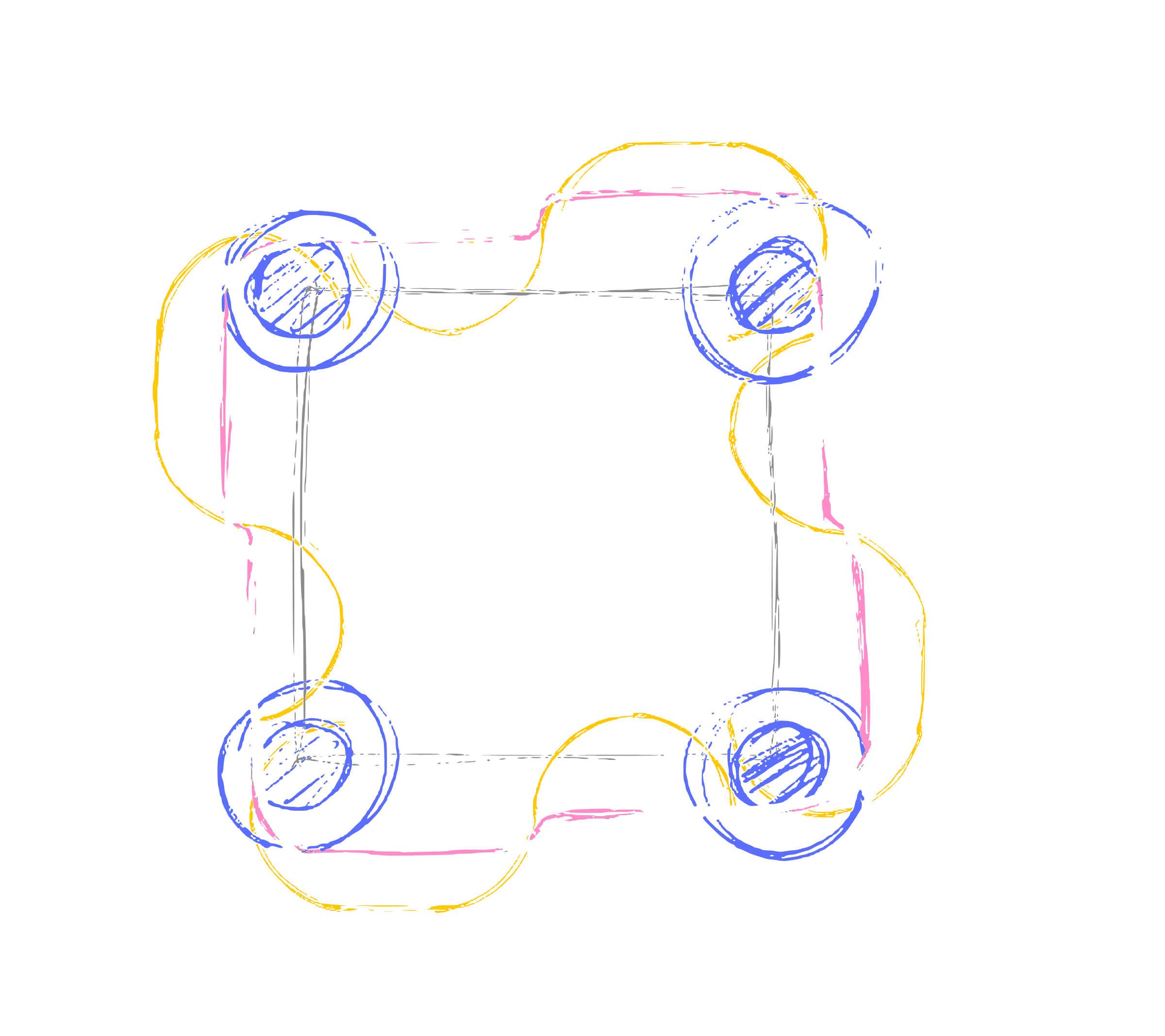
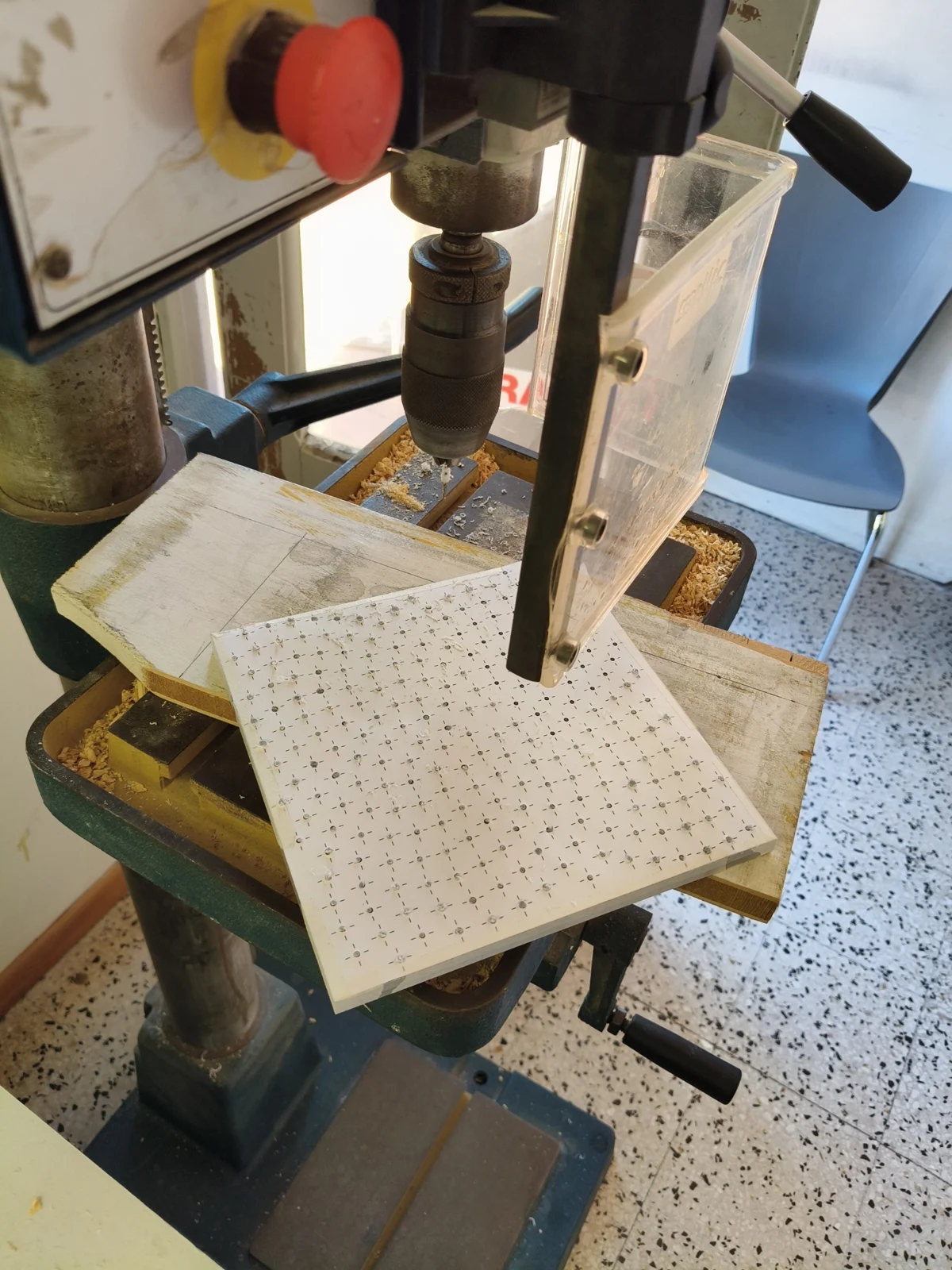
Making moves from the drilling template to the holes, from melting the tips to assembly. A continuous conversation between a geometric rule and the behaviour of a material.
 Flash
Flash